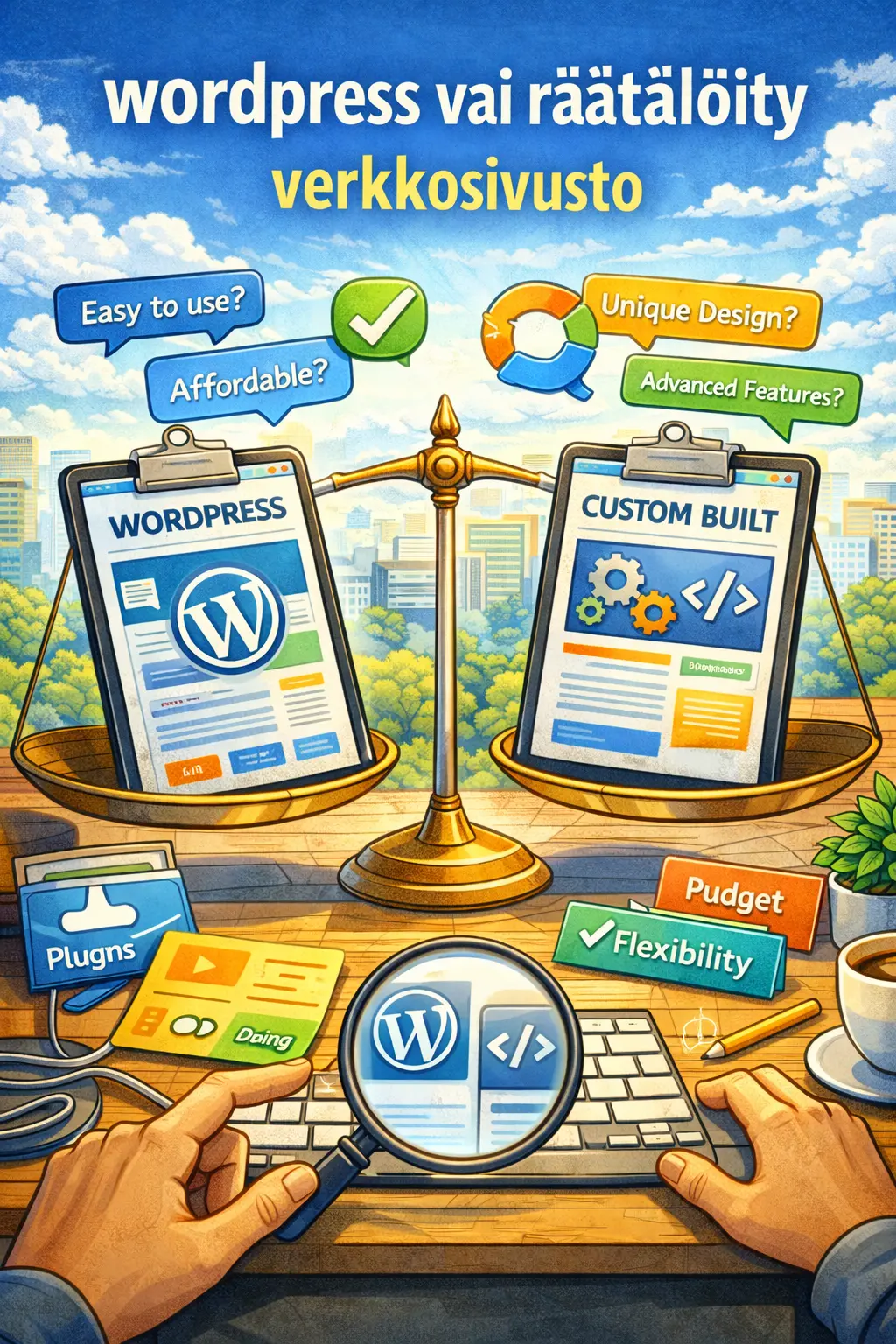
WordPress and a custom website are not automatic opposites. Both can be good choices, but the right answer depends on your goals, budget, maintenance needs, and how important the site is to your business. For a practical view of what fits your case, start with the services page.
When WordPress makes sense
WordPress is often a solid choice when the site structure is fairly standard, you want to update content yourself, and you want to keep the initial budget under control. A business website, service pages, a blog, and light growth needs can all work well with WordPress when the implementation stays clean and avoids plugin bloat.
- Simple content management: text, images, and blog posts can be updated without a developer
- Large ecosystem: a familiar solution for many businesses
- Lower starting cost: especially when requirements are fairly standard
When a custom site is the better choice
A custom implementation is usually stronger when you need more than a basic structure. If the goal is a fast, brand-specific, search-friendly website that is built for conversion and future development, a custom setup is often the better long-term option. That matters most when the website plays a serious role in lead generation and positioning.
- Lean technical structure: performance and code quality stay under tighter control
- More design freedom: you are not boxed in by a theme or page builder
- Cleaner long-term development: features can be added around real business needs
Which is better for SEO?
From an SEO perspective, either can perform well. The deciding factor is rarely the platform alone. Structure, internal linking, metadata, speed, mobile usability, and content quality matter more than whether the site runs on WordPress or another stack. The best results come when service pages, blog content, and technical SEO support the same plan.
Maintenance, security, and day-to-day work
WordPress usually needs more ongoing baseline maintenance because plugins, themes, and the core platform need regular updates. A custom site can be lighter operationally, but content editing needs to be planned properly. If ongoing cost is one of your main concerns, read website maintenance pricing in 2026.
Cost now versus later
WordPress often looks cheaper at the start, and in many cases that is true. But a quickly assembled WordPress site can become expensive later if it slows down, breaks during updates, or becomes hard to improve. A custom implementation may cost more upfront, but can pay back part of that investment through better performance, flexibility, and a stronger sales path.
A quick decision model
- Choose WordPress if you want easy content management, fairly standard needs, and a tighter budget
- Choose custom if the website is central to sales, you need more flexibility, and you want a clean long-term foundation
- Do not choose based on hype alone, choose based on what supports the business and daily use
Summary
WordPress is not automatically the wrong choice, and a custom site is not automatically overkill. The right decision depends on what you need now and what you expect the website to do one or two years from today. A strong website is not just the cheapest build. It is the one that supports growth without creating unnecessary technical debt.
If you want to see what a modern implementation looks like in practice, a strong example is Grand Design Pihat. It shows how visual polish, clear structure, and a modern build can work together.
Need help choosing the right approach? See services, browse the portfolio, and get in touch here.